
What is Direct Primary Care? A Simple Guide for Patients
Why more people are choosing a simpler, more accessible approach to healthcare.
Shannon Connolly MD
3/16/20263 min read
How Direct Primary Care Works
In a Direct Primary Care practice, patients pay a simple monthly membership fee for their primary care.
That membership typically includes:
• Office visits
• Virtual visits
• Messaging or texting your doctor
• Preventive care
• Management of chronic conditions
• Many in-office procedures and services
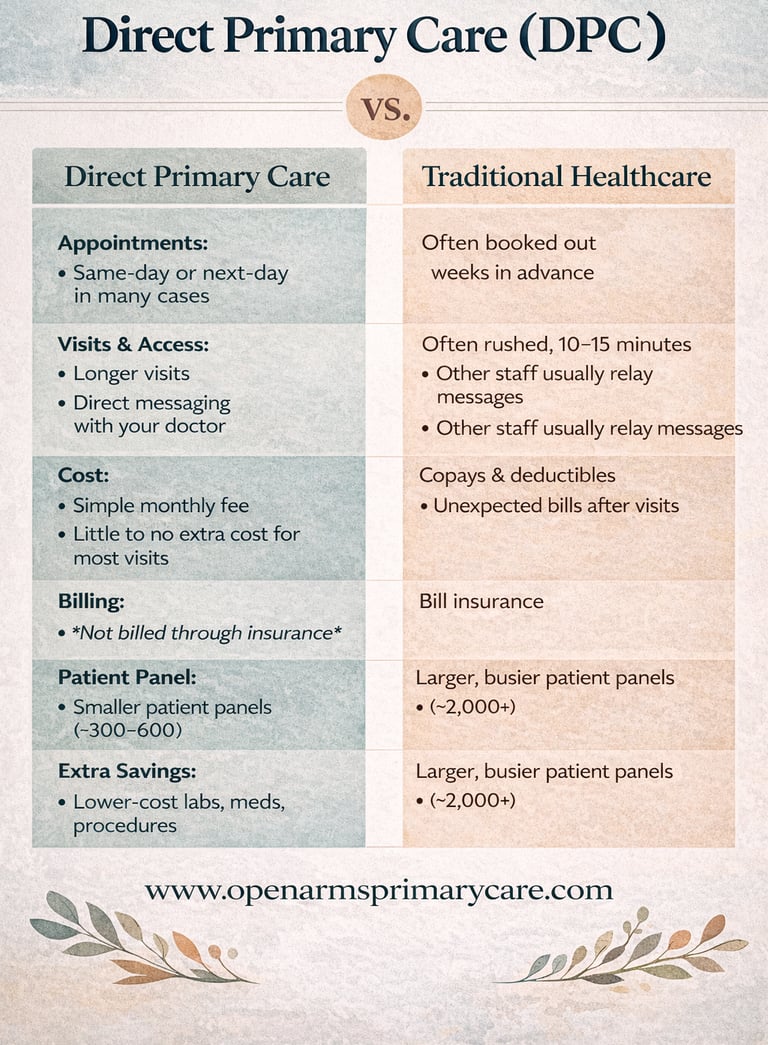
Because the practice does not bill insurance for primary care visits, it removes a lot of the administrative complexity that drives healthcare costs and delays. Instead of billing an insurance company after each visit, the doctor focuses on providing care directly to patients.
What Makes It Different From Traditional Primary Care?
The biggest differences patients notice are time, access, and transparency.
Easier Access to Your Doctor
In many traditional clinics, primary care providers are booked weeks in advance.
That’s not because doctors want it that way—it’s because insurance billing systems require doctors to see a high volume of patients each day.
Direct Primary Care practices are designed differently.
Because they have smaller patient panels, they can often offer:
• Same-day or next-day appointments
• Longer visits
• Direct communication with your doctor
For patients, that can mean getting help when you actually need it, rather than waiting weeks.
Longer, Less Rushed Visits
Many patients are surprised by how short traditional visits can be. Ten-minute appointments have become common in insurance-based systems.
In a Direct Primary Care practice, appointments are typically longer, allowing doctors to:
• listen carefully
• answer questions
• address multiple concerns
• focus on prevention and long-term health
For many patients, this leads to a more personal relationship with their physician.
Simple, Transparent Pricing
Another benefit of Direct Primary Care is clear pricing.
Patients know what their monthly membership covers, and there are typically no copays or surprise bills for office visits.
Many practices also offer discounted pricing on:
• laboratory tests
• medications
• imaging studies
Because these services can be purchased directly from vendors, the cost is often much lower than traditional healthcare prices.
Who Might Benefit Most From Direct Primary Care?
Direct Primary Care can be helpful for many people, but it’s especially valuable for:
People without health insurance: Without insurance, a single urgent care visit can cost $150–$250 or more. Direct Primary Care allows patients to access a physician for a predictable monthly cost, often making routine care more affordable.
People with high-deductible health plans: Many insured patients today have deductibles of $3,000–$7,000 before insurance pays for most services. In these situations, patients often end up paying out of pocket anyway. Direct Primary Care can reduce those costs by offering lower-priced labs, medications, and office visits.
People who want easier access to care: For busy professionals, parents, and caregivers, one of the biggest frustrations with traditional healthcare is simply getting an appointment.
Direct Primary Care focuses on making care accessible and convenient, often allowing patients to communicate with their doctor directly when questions arise.
Is Direct Primary Care Insurance?
Direct Primary Care is not health insurance.
Instead, it covers most routine primary care needs.
Patients are still encouraged to have insurance for things like:
• hospital care
• specialist visits
• surgeries
• emergencies
Many people pair Direct Primary Care with a high-deductible or catastrophic insurance plan to protect against major medical expenses.
A Return to Relationship-Based Medicine
For decades, family doctors often cared for patients and families over many years, building relationships that helped guide medical decisions.
Direct Primary Care aims to bring some of that relationship back into modern healthcare.
By removing the insurance billing layer, doctors are able to focus more on listening, educating, and partnering with patients in their care.
For many people, that leads to a healthcare experience that feels simpler, more personal, and easier to navigate.
Final Thoughts
Healthcare doesn’t have to be complicated.
Direct Primary Care is one approach that tries to make things more accessible, transparent, and patient-centered.
For patients who are frustrated with long waits, confusing bills, or rushed appointments, it may offer a different way to experience primary care.
If you’ve ever tried to schedule a doctor’s appointment and been told the next available visit is three weeks away, you’re not alone. For many people, getting medical care today can feel frustratingly complicated. Between insurance networks, copays, deductibles, rushed appointments, and long waits, even routine healthcare can become stressful.
Direct Primary Care (often called DPC) is a model of healthcare designed to simplify that experience. It’s not new—but it’s becoming more popular as patients look for care that is more accessible, more personal, and easier to understand.
We are based in Orange, California and serve patients throughout Orange County, including Anaheim, Santa Ana, Tustin, Fullerton, Garden Grove, and nearby communities.
Open Arms Primary Care
438 E Katella Ave Suite G
Orange, CA 92867
Tel 714-583-6173 Text us for the fastest response!
Fax (administrative) 714-610-9373
Fax (for medical records) 714-439-5186
info@openarmsprimarycare.com
© 2025. All rights reserved.
NOTICE TO PATIENTS ABOUT THE OPEN PAYMENTS DATABASE: For informational purposes only, a link to the federal Centers for Medicare and Medicaid Services (CMS) Open Payments web page is provided here. The federal Physician Payments Sunshine Act requires that detailed information about payment and other payments of value worth over ten dollars ($10) from manufacturers of drugs, medical devices, and biologics to physicians and teaching hospitals be made available to the public. You may search this federal database for payments made to physicians and teaching hospitals by visiting this website.